
As Dubai continues to grow as a global business hub and digital powerhouse, understanding how people search online has never been more crucial. With 99% internet penetration and 11.1 million internet users in the UAE at the start of 2025, the Emirate’s digital audience represents a high-value target for marketers and SEO professionals.
But effective keyword research goes beyond raw numbers; it requires a deep understanding of local search behavior, cultural context, multilingual preferences, and the evolving search landscape shaped by voice, AI, and mobile technologies.
In this article, we’ll explore actionable keyword research tactics tailored to Dubai’s market, supported by local statistics, trends, and practical strategies to help businesses rank higher and drive more qualified traffic.
1. Start With UAE-Specific Data: Know Your Market Sizes
Before selecting keywords, you must understand the scale and behavior of Dubai’s digital audience. The UAE now has nearly universal internet adoption (99% penetration), meaning most residents are online buyers, researchers, and information seekers.
For search marketers, this means:
- The volume of potential search demand is vast across industries, from tourism and real estate to e-commerce and professional services.
- Dubai attracts both local residents and international visitors, driving search volume in both English and Arabic.
To capture this demand, use tools such as Google Keyword Planner, SEMrush, Ahrefs, and Google Trends, configured with location filters set to the United Arab Emirates and, where possible, Dubai, to ensure results reflect regional search patterns rather than global or generic data.
2. Embrace Multilinguality: Arabic + English (and Beyond)
Dubai’s population is globally diverse, with over 200 nationalities residing in the city. Search behavior reflects this diversity, and savvy keyword research must account for multiple languages and dialects.
Key considerations:
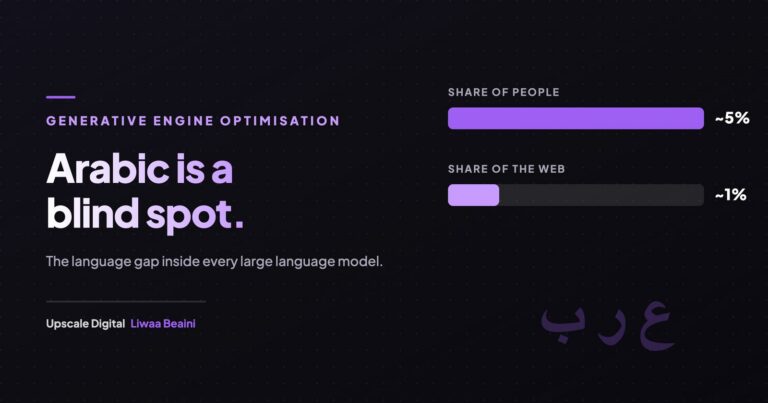
✔ Arabic Searches: A large portion of local search traffic is in Arabic, including Modern Standard Arabic and regional variants. Arabic content consumption has been growing rapidly, yet many businesses still prioritize English.
✔ English Searches: Widely used by expatriates and international audiences. Many high-value transactional terms (e.g., “luxury hotel booking Dubai”) are more commonly used in English.
✔ Other Languages: Hindi, Urdu, Russian, and Tagalog matter too, especially for service industries like hospitality, retail, or community-focused content.
Tactic: For every core keyword, generate language variants, both translations and culturally localized phrases. Tools like Google Trends let you compare interest in both languages and track rising terms.
3. Map User Intent, Don’t Chase Volume Alone
In Dubai’s competitive digital market, ranking for broad keywords like “digital marketing” or “real estate” isn’t enough. Search engines prioritize user intent, what the user wants to achieve with the search.
Rather than targeting only broad keywords, divide your keyword sets into:
- Informational intent: Queries like “best places to visit in Dubai” or “tax rules for freelancers in Dubai.”
- Transactional intent: Buyers ready to convert, e.g., “book hotel Downtown Dubai” or “SEO agency services Dubai.”
- Navigational intent: Queries that reflect brand or service navigation, like “Google Business Profile Dubai setup”.
Segmenting by intent helps you craft content that matches user expectations and boosts engagement, an indirect ranking factor. Use tools such as SEMrush or Ahrefs to analyze intent signals and search volume.
4. Prioritize Local & Long-Tail Keywords
Local intent dominates Dubai search behavior. A staggering 72% of searches have local intent (“near me”, “in Dubai” or similar), indicating a strong preference for geographically relevant results.
Furthermore:
- 78% of local mobile searches in Dubai result in offline conversions, indicating users have real buying intent.
- 60% of searches explicitly include “near me” or other geographic modifiers, making location-based modifiers essential to your keyword strategy.
Tactic: Build keyword lists that include:
- City modifiers: “best salon in JLT Dubai.”
- Neighborhood names: “Dentist Dubai Marina”
- Landmark-linked searches: “coffee near Burj Khalifa.”
- Dialect variations: Arabic equivalents for local queries
Such long-tail local keywords often have lower competition and higher conversion value than generic terms, making them high-ROI targets.
5. Optimize for Voice & Conversational Queries
Voice search is accelerating rapidly in the UAE, with around 46.7% of internet users using voice assistants weekly.
Voice searches tend to be:
- More conversational
- Longer in structure (e.g., “Where is the nearest coffee shop in Deira?”)
- Often question-based
This trend is driven by mobile usage and the adoption of smart assistants. Dubai residents are increasingly using voice search both in Arabic and English.
Tactics for voice optimised keyword research:
✔ Include natural language queries and question formats (who, what, where, how)
✔ Create FAQ content that answers these conversational queries
✔ Implement schema markup and featured snippet targeting to increase chances of voice assistant answers appearing directly on SERPs
6. Use Clusters, Not Singular Keywords
Rather than building strategies around single high-volume keywords, modern SEO emphasizes keyword clusters, thematic groups of related terms that support content hubs.
For example, for real estate SEO Dubai, you might cluster:
- “luxury apartments Dubai Marina”
- “off-plan property SEO Dubai”
- “real estate lead generation Dubai”
- “best property developer SEO services”
Clustered keywords help content rank for multiple related searches, increasing visibility across the search ecosystem and providing context to search engines.
7. Competitor & Culture-Based Keyword Insights
Dubai’s digital ecosystem includes many local and global competitors across sectors. Use tools to analyze competitor rankings:
- Investigate competitor meta tags, landing pages, and content structure
- Identify high-ranking keywords for rivals
- Spot keyword gaps where competitors are not competitive
Additionally, cultural factors matter in keyword phrasing. Content must be culturally appropriate, respectful, and locally relevant, especially in Arabic contexts.
8. Track & Adapt With Data Tools
Finally, tracking performance and iterating are critical. Some best practices:
✔ Set up local dashboards in SEMrush or Ahrefs with the UAE as the target region
✔ Use Google Analytics & Search Console to monitor which keywords drive clicks and conversions
✔ Regularly check Google Trends to spot seasonal or real-time search shifts (e.g., festival seasons, Expo events)
Conclusion
Keyword research for Dubai markets is more than a standard SEO task; it’s a strategic process that blends deep market insight, multilingual fluency, user intent analysis, local behaviour patterns, and up-to-date awareness of voice and AI search evolutions.
By aligning your keyword strategy with Dubai’s unique digital landscape, backed by data showing almost universal internet penetration (99%) and significant local search intent, you can create content that resonates, ranks, and converts in this dynamic market.
Want a free AI search audit for your brand?
We'll check your visibility across ChatGPT, Perplexity and Google AI Overviews for your top keywords — and show you exactly where to improve. 30 minutes, no obligation.
Book a Free Call